
Stop Nagging! How a Chore Chart for Kids Actually Works
If you are saying “did you brush your teeth?” for the fifth time before 8am, the problem is probably not your child. It is the system. A good chore chart does the reminding for you. Your child looks at the chart, sees the empty box, and knows what comes next — without you repeating it. That is the whole idea. Here is how to make one actually work, from toddler to teen.
1. Match the chart to the age. Toddlers (2–4): picture-only, no reading needed. Just 3–4 jobs — help make the bed, brush teeth, toys in the bin, wash hands. One sticker on each circle when it is done. Ages 5–8: a simple daily checklist, morning, after school and evening. Make the bed, homework, tidy the room, feed the pet, set the table. Start with 3–5 chores, then add one a week. Ages 9–12: a weekly chart they own. Dishwasher, homework, reading, laundry, trash and pet care. They check it off, track their goal, and earn their reward. Teens (13+): a daily + weekly plan with top 3 priorities. Homework, room resets, laundry, cooking and bathroom jobs. Let them track it themselves — that independence is the point.
2. Keep the list short. Most charts fail because they are too long. Twelve chores on day one just teaches a child to ignore the chart. Start with three. When those three happen without a reminder for a week, add one more. Small wins build the habit, and the habit is what lasts.
3. Hang it where they can see it. Fridge, bedroom door, or beside the bathroom mirror — at their eye level, not yours. Keep stickers or a pen right next to it, so checking off feels easy and fun. If it lives in a drawer, it does not exist.
4. Praise the effort, not the perfection. “Thanks, that really helps” works better than correcting how they made the bed. Celebrate the finished box, the full row, the week they did it on their own. That is what a reward tracker is for — not a bribe, but a visible record that effort adds up.
5. Let the chart be the boss. When a job is missed, point to the chart, not to a lecture: “What is next on your chart?” It keeps you out of the nagging loop, and it gives your child a clear plan they can follow on their own. Busy days are hard enough. A chart that is clear, colourful and simple to use makes mornings run smoother — for everyone.
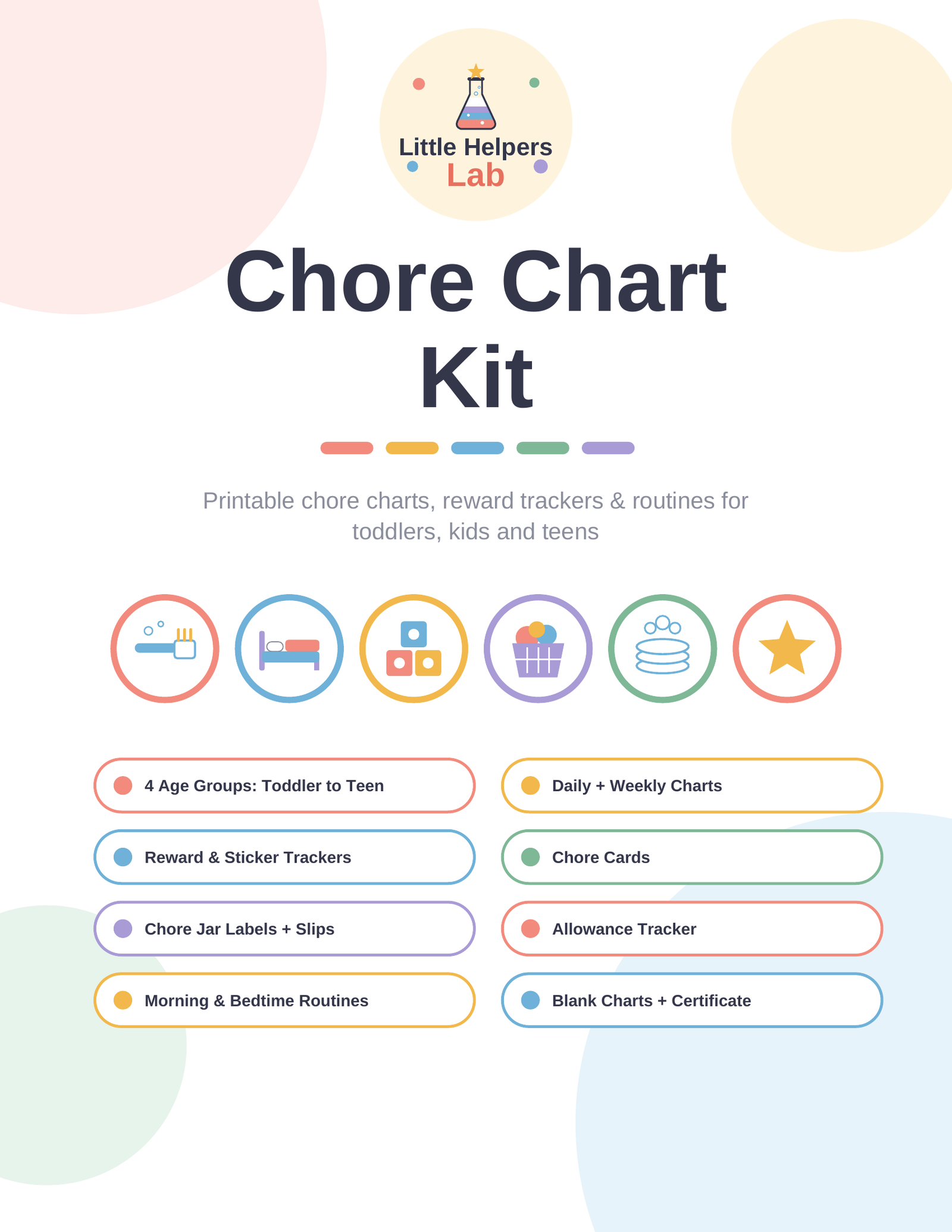
Try it with a pack: The Chore Chart Kit from Little Helpers Lab has daily + weekly charts for toddlers to teens, plus reward trackers, chore cards, a chore jar, allowance tracker and morning & bedtime routines — 34 printable pages, $7.00 AUD, print at home as often as you like. Get it here: https://littlehelperslab.com/shop/chore-chart-kit/