
One Chart for the Whole Family: How a Family Chore Chart Works
Most chore charts are for one child. A family chore chart is for everyone — and that is what makes it work.
When the jobs are on one page, in one place, everyone can see who is doing what. No one person has to remember it all, remind everyone, and carry the invisible load.
How it works
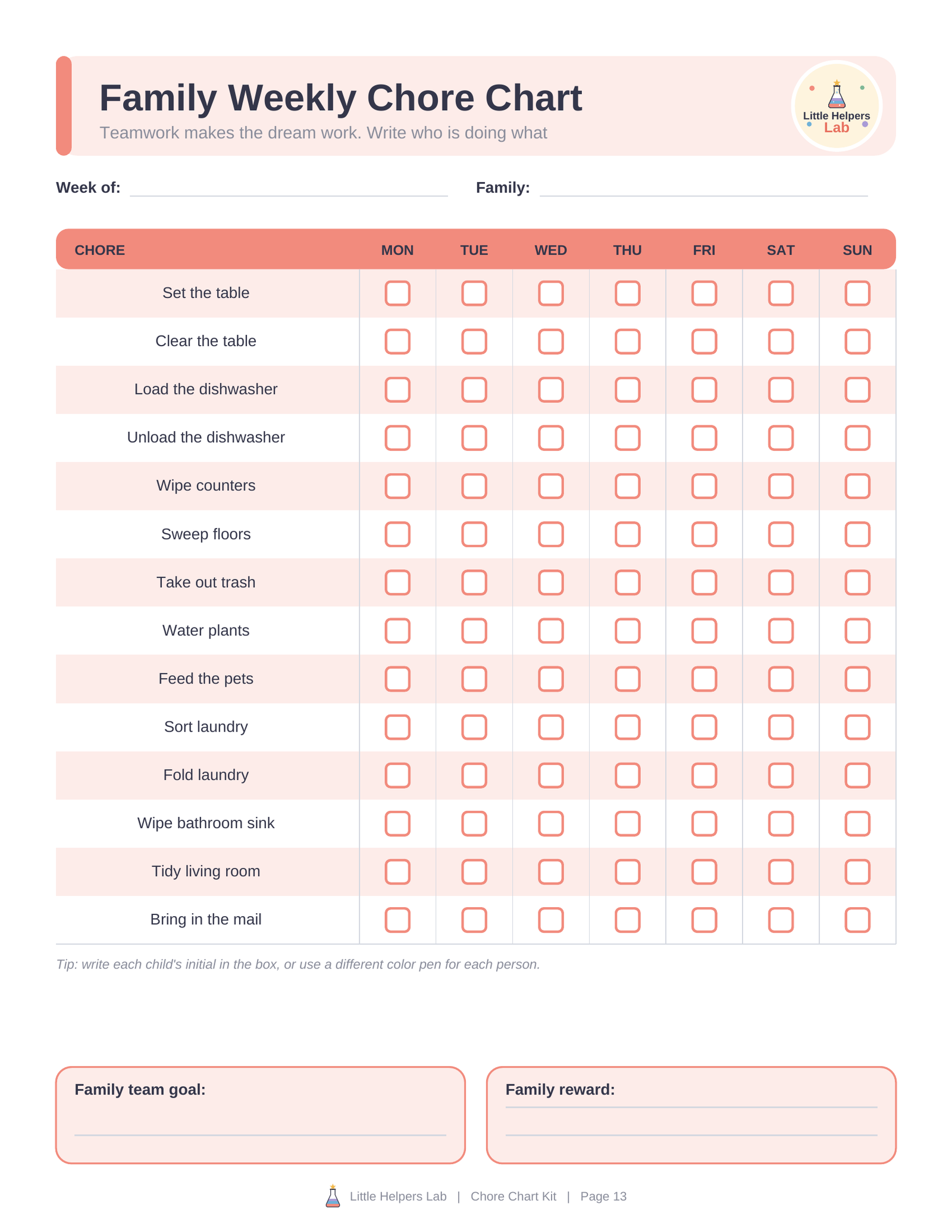
One weekly chart, with chores down the side and Monday to Sunday across the top.
Set the table, clear the table, load the dishwasher, unload the dishwasher, wipe counters, sweep floors, take out trash, water plants, feed the pets, sort laundry, fold laundry, wipe the bathroom sink, tidy the living room, bring in the mail.
Write each child’s initial in the box when they do it — or use a different colour pen per person. At a glance, you can see if the load is fair.
Pick jobs together
Sit down for five minutes on Sunday and pick the week’s jobs together. Let each child choose one job they like, and one job that helps the house. Choice makes ownership.
Keep the list to what your family actually does. A chart with 14 jobs you never do is just decoration.
Add a family goal, not just individual ones
At the bottom of the chart, add two boxes: Family team goal, and Family reward.
“When we all finish our jobs this week, we…” — a movie night, a picnic, a board game afternoon. A shared reward turns chores from “my jobs” into “our week.”
Keep it visible
Hang it on the fridge, where everyone walks past it. That is the whole system — one chart, one place, everyone can see it.
Teamwork makes the dream work, and it starts with a chart everyone can read.
Try it with a pack
The Chore Chart Kit from Little Helpers Lab includes a Family Weekly Chore Chart, plus daily + weekly charts for toddlers to teens, reward trackers, chore cards and more. 34 printable pages, $7.00 AUD.
Get it here: https://littlehelperslab.com/shop/chore-chart-kit/